The Call of The Wild The Call of The Wild
Jack London
Scribner's Classics. 1999
 Mojave Mojave
Diane Siebert
HarperCollins 1988
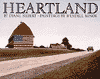 Heartland Heartland
Diane Siebert
HarperCollins 1989
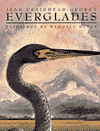 Everglades Everglades
Jean Craighead George
HarperCollins 1995
 Grand Canyon Grand Canyon
Wendell Minor
Scholastic Inc. 1998
 Cliff Hanger Cliff Hanger
Jean Craighead George
Harper Collins 2002
NEW!
 Fire Storm Fire Storm
Jean Craighead George
Harper Collins
Summer 2003
NEW!
 Snow Bear Snow Bear
Jean Craighead George
Hyperion
Available in Paperback January 2003
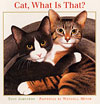 Cat, What is That?
Tony Johnston Cat, What is That?
Tony Johnston
Paintings by Wendell Minor
Harper Collins August 2001
 Pumpkin Heads Pumpkin Heads
written and illustrated by Wendell Minor
The Blue Sky Press/Scholastic 2000
 America The Beautiful America The Beautiful
Katharine Lee Bates
Putnam
July 2003
NEW!
 Rachel Rachel
Amy Ehrlich
Harcourt/Silver Whistle
April 2003
NEW!
|
|
|
BWI’s (Book Wholesalers Inc.) Collection Development staff of librarians and paraprofessionals was pleased to interview author/illustrator, Wendell Minor, on February 11, 2003 about his upcoming book, America the Beautiful, stopping at various points of interest along the way.
BWI: Thanks for doing this interview today. Let’s start at the beginning: What books did you like when you were young?
WM: My all-time favorites were the Beatrix Potter stories—Mr. McGregor’s garden. Having parents who grew up on farms in the Mid-West, I had an intense interest in animals and nature at an early age. There was also another book, the title of which I can’t remember, but it was a die-cut book where every animal had the same button eye and you’d learn all about the cows and pigs and horses and what kind of sounds they made. I remember my Uncle Andy—who was the first one back from World War II, my father was still serving in Europe—would read me that book over and over again; Uncle Andy grew up on a farm as well.
BWI: Were you a reader when you were young?
WM: Actually, my mother read to me. You’re speaking to a kind of reformed dyslexic. I had to go through special reading classes from second through sixth grades. I was very visually astute but had difficulty with the verbal. It wasn’t until sixth grade that I had a teacher, Mr. Gilkey, who read to us on a daily basis. He read us the great stories of Jack London and Mark Twain. It was at that point I really took to reading. Mr. Gilkey was very instrumental in helping me overcome my reading problems. So, after that point, I was an avid reader.
BWI: And maybe that also played into your becoming an artist?
WM: Absolutely. When he read Jack London’s THE CALL OF THE WILD it had a profound effect on me because in my mind I could visualize all of these scenes. You’re probably aware of the fact that I re-illustrated THE CALL OF THE WILD for Scribner’s Classics a few years ago, it was almost as if life had come full-circle for me because the images that I imagined as a twelve-year-old, I was able to paint as an adult. In the dedication, I dedicated those pictures to Mr. Gilkey's memory.
BWI: When did you discover you had the ability to paint or draw?
WM: It started around fourth grade. I was born with a congenital heart defect, a heart murmur, which kept me from participating in sports. I think every child has to be good at something and I found that I could draw pictures and impress my classmates. As a matter of fact, at a recent high-school reunion, I ran into my old classmate, Ed Ketley, and I said to Ed, “Do you remember when you accused me of tracing a buffalo and I said, “No, I had drawn it freehand”? It was at that precise moment that I realized I had some talent if I could impress Ed! He remembered the incident quite well. I think it was my way of trying to excel at something and I was acknowledged for that talent. I wound up doing sets for plays, I was the school newspaper artist, and I was the editor-in-chief of my high school year-book.
BWI: What about when you decided to make a living as an artist?
WM: I grew up in the Mid-West, the son of parents who grew up on farms. They were obviously quite pragmatic. If you’ve ever listened to Garrison Keillor talk about the Norwegian bachelor farmers…my grandfather wasn’t a bachelor farmer, but he was a Norwegian farmer. They really could not see the relevance in pursuing the Arts, nevertheless, my mother secretly supported my efforts. That became the seminal interest in my life, pursuing a career when I really didn’t know how I was going to do it except the passion was always there. One step at a time, I eventually figured out how I was going to make a living at it. I literally have been making a living with my paintbrush since I was 22 years old.
BWI: Do you spend a lot of time at it every day?
WM: For the last 33 years, I’ve been putting in 12 to 14-hour days at least five days a week, and 8 to 10 hours on Saturdays and Sundays.
BWI: Goodness!
WM: You have one hand, one brush, and only so many hours in a day.
BWI: Why so much painting at this point? Do you just have a lot of work to do?
WM: Well, it’s interesting. I had major surgery when I was twenty, to correct a heart problem and I came very close to not surviving. At the ripe old age of twenty, I had the gift of insight as to how precious life is. I had a passion for my work and I decided I wasn’t going to waste a moment of my time. I was motivated to pursue my passion. What I find interesting is, the older I get and the more I have accomplished, the more I realize how much I haven’t accomplished.
BWI: Do you feel that working with different publishers allows you more freedom of expression because you’re working with different editors, or is it because of having so many projects that you have to work with multiple publishers?
WM: I think it’s a combination of both of those things. As you probably well know, different publishing houses have different philosophical approaches and an idea which is a delight for one publisher may not be of the remotest interest to another. I think you judge your interests and projects and try to fit them with editors you think will respond more quickly to that idea. And, you’re also aware of how fluid the publishing industry has come to be in the last five or ten years. My loyalty tends to be with editors, who happen to move around a lot these days. So, I may start a project with one editor and then, all of a sudden, that project gets moved to another house simply because the editor has moved.
Primarily I find that the amount of work I want to do couldn’t be absorbed by one publisher and, secondly, the various interests of various publishing houses do change. So, I try to tailor my projects to specific personalities.
BWI: You said on your website that you often come up with ideas and then bring them to an author. How does that work exactly? From what we know of the book industry, it’s usually the opposite, that the author has an idea and the editor sends it to an illustrator.
WB: That’s an interesting question because publishers usually like to keep authors and illustrators apart. I started my career 33 years ago and for a few decades I focused on doing covers for novels—reading them and in the process getting to know some of the best editors—Michael Korda, Robert Gottlieb, Nan Talese—and some very important authors on a personal basis. I established a rapport with the written word, the editorial process and the writers’ process early on. The natural thing for me is to want to work closely with authors because I have a profound respect for the written word and, let’s face it, the written word is what comes first.
Since I’m such a visual person I may have an idea that I think I can work on with an author, and wouldn’t have the slightest hesitation to call them and say, “Look, I have an idea that I think you might be interested in.” This started when I did MOJAVE, which was published in ’88. Halfway through that project, I decided that it would be wonderful if Diane Siebert wrote a poem about the heartland. Unbeknownst to me, she had also grown up in Illinois and had a rural background. I asked my editor at the time if she thought Diane might be interested in writing a poem called HEARTLAND. And indeed she was.
My long-time relationship with Jean Craighead George began when I promoted the idea of doing the EVERGLADES book, having learned that she had written a handbook for Everglades National Park. Her father was one of the early biologists in the Park…before it was even officially a park. So I contacted her, we talked about the idea and about three years later the book came into being. I have a similar working relationship with Ann Turner and Robert Burleigh. If I have a sense of what an author is about, I can usually suggest an idea, and sometimes they’ll take to it, sometimes they won’t. Of course, that has also evolved into my writing my own material when I find I have no other home for it.
BWI: Do you think it makes a difference when you pitch an idea to an editor if you’ve already found an author?
WM: I think so now more than ever, simply because publishers like a certain comfort level. So, if you have an author with an established reputation and you, as an artist have an established reputation, you’re bringing them a project that has already been resolved. And, I think with the changing marketplace, the mid-list books that offer opportunities for an editor choosing an illustrator for a particular project are becoming more rare. From my perspective, conceiving a project with an author and presenting it as a complete package makes it much easier for a publisher to make a decision on whether it’s a go or not.
BWI: Who or what influences your work at present? What artists do you admire?
WM: Most of my influences have been based in the late nineteenth century and early twentieth-century American illustration and painting. If you’ve seen my book GRAND CANYON: EXPLORING A NATURAL WONDER—that was totally inspired by the painter and illustrator Thomas Moran and the artist-explorer experience. I wanted to re-create that experience in the latter part of the twentieth century for young students. Winslow Homer, Edward Hopper, Georgia O’Keefe, and Rockwell Kent are all artists I very much admire. Those illustrators and artists had in their work a sense of place, development of character and narrative. I think you probably get a sense in my work that I’m very much focused on American history and American sense of place.
As for living artists: one who impressed me very early on and really inspired me to create illustrations for picture books was Chris Van Allsburg. Do you remember his book THE WRECK OF THE ZEPHYR? His paintings seemed to be a combination of influences from Rene Magritte and Edward Hopper. In the early 80s full-color books were beginning to be more prevalent. Since I was a painter, I felt that I needed to have the full-color process in order to take full advantage of what I had to offer. Jerry Pinkney is a very good friend of mine. I admire his work immensely, as well as David Wiesner’s. There’re a number of my contemporaries whom I admire a great deal.
But, I really try to keep my focus on antiquity. You know, Leonardo da Vinci once said that one learns best through antiquity.
BWI: Describe your creative process. You work so hard. How do you choose exactly which subjects to use for a specific illustration or for a book theme?
WM: That covers a wide subject. I can answer it in many different ways. I work on many different projects at once. I am always working ahead three or four or five years. Subjects come to me through reading, through a television program; an idea may be sparked by reading a novel or a biography or when I travel someplace. I’m always open and searching for new book ideas.
About my process: Jean George and I are working on an adventure series for children. We get together and discuss storylines. In the case of this series, we used her family’s experiences as the basis for all the stories and we used members of her family as models for the pictures. We did CLIFF HANGER first, and the next one, called FIRE STORM, is due out in August. A third one, called SNOWBOARD TWIST will be published in September of 2004. They’re all about young Axel and his dog, Grits, in the Teton Mountains. I do sketches for a storyboard, and then Jean and I go on location. The characters (Jean’s family) act out the entire book and I shoot photographs of each scene, which I use back in the studio as my reference for my finished drawings. I find that working with real people in real situations gives you a better sense of reality and oftentimes you discover scenarios that may be better than if you were just sitting behind the board and working strictly from your imagination. I also design my own books so I work with the elements of typography, different fonts and pagination and so forth and create a complete finished black and white dummy for my editors’ consideration. Once that’s approved, I go right into the full-color paintings.
In the last several years I’ve been working in watercolor and gouache pretty much exclusively.
BWI: Do you see any definable trends in children’s book illustrating in the future? And, do you have any comment on computer-generated illustrations?
WM: Computer-generated illustration has had, I think, marginal success. One of the most successful computer artists I’m aware of is Bill Joyce. His conventional painting style has evolved very nicely into a computer style. I think there’s always a place for new trends and new technology. I think as technology improves and becomes more fluid you’ll begin to see a merge of more natural painterly techniques with the technology so that you won’t really be aware that they’re computer-generated. I think that’s the problem I have with it right now—you’re too conscious of the medium that generated it. I feel that once the style exceeds content you stop the viewer from getting involved in the story. I really don’t want people to look at my work and say, “Gee, that’s a wonderful style in which he painted.” I want them to be totally engrossed in the scene, to project their feelings into that scene and I don’t want style to block that process. My philosophy has always been: work very classically, tell a good story, honor that story, and hopefully, you will convince the reader that there’s a sense of truth that’s being told, without them really being conscious of how cleverly something has been painted.
BWI: Texture seems to be really important in your work. How do you go about including that much detail? The background and everything comes out, and the central figure’s blended into that
WM: I like that question. I commend you for being sensitive to that because it’s important to me. You probably had a teacher who gave you a little piece of advice that you’ve never forgotten. I had a terrific German illustration teacher at the Ringling School of Art and Design. I’ll try to affect his accent: He’d say, “Vendell, if you do a lot of textures, I’ll giff you A.” “The edge defines the form” is another line that I’ll always remember. At twilight when you look at the edge of a tree (an oak has a certain form to it, a conifer has a certain form) the edge of something defines the form.
I tend to accentuate the values between dark and light. I was taught that when a dark value approaches a lighter value, where those two values meet, the darker value becomes darker and the lighter value becomes lighter. I accentuate this principle in my painting. It gives dominant objects in a picture separation from the background environment.
BWI: Have you ever worked with other artists’ sketches? It seems like you do all of your own—a one-man show!
WM: No, I do not work with other artist's sketches, but I do use picture researchers when I’m in a bind or I can’t get to a place. I have a number of professional photographer friends across the country, who I call up and say, “Jason or Bob, do you have in your files this particular image and if you don’t, can you go out and shoot it for me?” So, sometimes because of time constraints, I use my network of photographer friends. As an example, Tom Mangelsen, who’s a very famous nature photographer…when I was doing the book SNOW BEAR with Jean Craighead George, there was no way I was going to get up to the Arctic to photograph polar bears. But I know that Tom has quite a wonderful collection of polar bear photographs and he allowed me access to his files for a fee, so I used that as a reference source and then acknowledged it in the book.
BWI: Your knack for capturing a child’s thoughts and emotions seems very keen. With all the research that you do for getting your visuals right, how do you keep your chops sharp for knowing how children behave or what’s going to be appealing to a child?
WM: I think it pays to never grow up! I do a fair amount of speaking to children at schools and my wife Florence and I have nieces and nephews and we both have godchildren. I’m very keen on getting a sense of what children observe and think. But, most important is my memory of what’s important as a child. And, I think there’s one thing that time doesn’t change, and that is, being able to recall how you felt as a child and what you experienced as a child. I have almost total visual recall of my childhood. I try to tap into that inner child constantly and figure out for myself what I think works. If a student responds in kind to what I’ve put into it, then I know I’m on the right track.
BWI: So are you in the situation where you can show kids the galleys and the mock-ups that you’re working on?
WM: I have. As an example, I gave a presentation at a school in New Jersey and I read CLIFF HANGER to the students before it was published and also read the story of FIRE STORM and asked them what they thought of it and got some feedback. That’s only workable to a point, but you get a sense if you’ve captured their imagination, and if they ask a lot of questions about what’s going on, then you know they’re engrossed in the story. But I do think it’s important for me (for most of my work is based in reality and not a fanciful situation) that they understand what I’m trying to do, and I think most kids really do get it.
BWI: I think your popularity bears that out.
WM: Well, one can hope.
BWI: How do you go about working on different projects simultaneously, if you do, or do you require a cooling-down period from one project to focus on another?
WM: I wish I had a cooling-off period! Occasionally I do, but I find that my projects mostly overlap. I tend to like to multi-task, if that’s the current phrase. I’ll work on the final drawings for one project, and at the same time, do research for several others. I find that going back and forth with, say, three or four projects at once keeps all of them fresh and I have a better perspective. I don’t get stuck as much. If I focus only on one project, I can get stale really quickly. When I find I’m really reaching an impasse on a project, I’ll take a break. Getting away from one project tends to help you solve problems faster on another. I’ve talked to other artists who say, “Well, I can’t focus on more than one book at a time.” Maybe it’s because of my background, when I used to work on fourteen covers at once, painting, and reading and researching. I got used to working that way and I found that the skills I learned doing covers served me well in creating children’s books.
BWI: Let’s talk about some of your previous work…the recent biography that you worked with on about John James Audubon. Inside the book, there are examples of Audubon’s own work, though you did the bulk of the illustrations. Did you have to do anything differently in your creative process to try to match, not necessarily his exact creations, but make the tones and everything mesh?
WM: That’s a good question. I studied much of the art created in the early 1800s and tried to recreate the period feel of early nineteenth century watercolors in my own work to tell Audubon’s story. I then selected a series of Audubon bird paintings as spot illustrations for each text spread that would correspond to the subject matter in my paintings.
In researching that book, I read three biographies of Audubon, and one thing impressed me tremendously—all the work we know Audubon for was produced in only nineteen years. That’s an incredible amount of work. He traveled 40,000 miles in this country before mass transportation. On foot, on horseback, and by boat, he covered 40,000 miles in nineteen years and did that tremendous body of work!
I take a great deal of care and consideration in every book as to its design, font selection and virtually every detail, including going on press with each book whenever possible.
BWI: Was this a case of you proposing the biography to the writer?
WM: No, in this case, Marcia Marshall, who has since retired, knew my work, and when she got the manuscript from Burleigh decided that it would be a perfect match. She called me, sent me a copy, I read it and loved it immediately. What I love about the storyline is that the text is written in the form of a letter from Audubon to his father, trying to explain why he has to pursue his passion though his father wants him to be a merchant. It correlates with my life in that my father wanted me to stay home in Illinois and work in the factory where he worked. He did not want me to go off and do something foolish, like becoming an artist, so I truly identified with Audubon's relationship with his father. I loved the message of that book—follow your heart. I think every child has to know that.
BWI: CAT, WHAT IS THAT? is a different subject matter from most of your work where you focus mainly on the outdoor picture or what most people tend to think of as “wild nature.” This is much more intimate…how did this book develop? Did the pictures come first, or the words, and weren’t these your own cats?
WM: Yes. The two cats on the cover of the book are Willie, the tiger, and Mouse the gray and white cat. Mouse has unfortunately passed away. The black and white cat with the cow is Sofie…Sofie’s just walked by as we were talking…and Willie is still with us.
I had that manuscript offered to me by Harper a number of years ago. It took me four years to actually get to it. My editor knew how much I loved cats and I thought it would be a challenge for me to try to create more of an intimate portrait of cats. We have a lot of friends who are cat crazy and so I requested their favorite photographs of their cats, including the art director’s. The big orange cat looking at the mouse is Al Cetta’s cat. Al is the art director at HarperCollins. I wanted to work with very bold and simple compositional elements. I think the poem is very humorous and delightfully sophisticated, very much the way cats are. And, being a lifelong observer of felines, I wanted to try and express visually what that poem did with very, very pared down words: the elegance and the simplicity and the mystery of cats. I had a lot of fun doing that, especially being able to document our own critters that spend 24 hours a day with us. The cats come with us every day to the studio.
BWI: What about illustrating jackets for historical figures, such as the books on Truman and Adams and Lincoln. You said you read the books first, and then go on to the work. How do you visualize these figures and are you restricted by the traditional images of these men?
WM: When the manuscript is available, I will read it. I’ve done David McCullough’s covers since THE GREAT BRIDGE in 1972. We got to know each other quite well over the years. Covers sometimes get done before the book is finished these days because things are moving so quickly. In the case of TRUMAN, David came down from Massachusetts and we spent quite a few hours discussing Truman and what this book was going to be before I ever got to read it. I researched many portraits done of Truman, none of which had ever been done in profile. Somehow, I felt that that demonstrated the strength and character of the man. Also, Truman was born in a simpler time, in a rural part of Missouri. It was a long road from Missouri farm boy to the White House. David and I talked about different periods of art. And, of course, the Thomas Hart Benton murals that I saw at the Truman Library years ago—that regionalist style—are emblematic of art from the soil; they had a profound effect on me. So, I was thinking Grant Wood, I was thinking of Thomas Hart Benton, and I was thinking of this monumental figure who was a great student of Roman government. He was probably one of the least formally educated men to serve in the White House but one of the most well read presidents to ever inhabit the White House.
For the cover of David Herbert Donald’s LINCOLN, I used several official sources for my research.
BWI: You’ve mentioned that you’ve done a lot of books where your work is paired up with an author but when you haven’t found a home for that, you’ve gone ahead and written the book yourself, as you did in PUMPKIN HEADS! and GRAND CANYON. Do you prefer one way over the other?
WM: I think the challenge for me in the future is to try to create my own brand of words and pictures. As a visual person, I tend to think of a storyboard of pictures first and writing as an accompaniment to the pictures. I do it in reverse. When I’m reading something from an author, I’m visualizing it. They’re verbal—pictures come second. With me, pictures come first and verbal comes second. I think I like doing them equally well, but I do see doing more of my own work in the future.
BWI: About your forthcoming book, AMERICA THE BEAUTIFUL, how did you come up with the idea for that book? Did 9/11 have anything to do with it at all?
WM: I received a call from my editor, Nancy Paulsen, who asked if I might consider illustrating GOD BLESS AMERICA, however, unbeknownst to us, another publisher had already secured the rights to use the text for a picture book of their own. So, I suggested to Nancy the idea of doing my version of AMERICA THE BEAUTIFUL which would include all four verses. I also felt strongly about not doing such a project for the first anniversary of 9/11 but rather have the book be a celebration of America. I requested that the book be published either for Memorial Day or the 4th of July, after the first anniversary.
BWI: Do you have a favorite place in the U.S. of all the places you’ve been? If so, what it is about that place that makes it your favorite?
WM: Let’s put it this way, I think America is probably one of the most beautiful places on Earth. We have so much diversity here. If you’ve ever read about the adventures of Lewis and Clark…I have a tremendous romance with the West. You could probably guess that. I painted for several summers in the Santa Fe-Taos area. I’ve painted in Wyoming and Montana, California, Maine, Florida, South Carolina, the Outer Banks. Each place in America has a unique ecosystem, a unique sense of place. I love the West and the high desert country, maybe because when I was a little boy I always wanted to be a cowboy. I love the mountains, the Tetons. I love the Sangre de Cristo Mountains. I love the Indian pueblo culture, the Four Corners area where you have the Hopi and the Navajo, where you really get a sense of timelessness and the Native American spirit. My love affair with America started when I was young and I feel very privileged to have had the chance to put my personal perspective on a poem like “America the Beautiful.” I think Katharine Lee Bates’ poem is one of the most beautiful poems that has ever been written and probably ever will be written, about the sense of what our country is.
What I said in the introduction of the book is that each of us has a very unique vision when we sing the words to that song, and each of us has a special identification with a certain place in America, whether it’s Cape Cod or the Okefenokee Swamp in Georgia or the lowlands of the Outer Banks or Southern California. I tried to explain what I feel and see when I sing the words of that song, and my hope is that by sharing that with the readers I might inspire them to think about the places which are special to them.
BWI: There were two very striking images in AMERICA. One is the angel weathervane, which uses such a mundane object to bring the idea of celestial guardianship to America. The other one was the lighthouse crown. What was it that inspired you to use these two symbols for illustrations?
WM: That’s also a very good observation. You know, “Crown thy good with brotherhood, God shed his grace on thee.” We’re living in a society that’s very sensitive about the separation of church and state but I thought, “What symbol can I use, that has some religious connotation but is symbolically all inclusive?” When I think about the craftsmen of early America (and we all know that New England is famous for weathervanes) I thought, this is heralding the words “God shed his grace on thee” in a way that felt appropriate.
I do a lot of iconographic thinking. I think for most people, a lighthouse represents something of warmth and security and guidance in one’s life. And, when I started thinking of “From sea to shining sea,” and that Katharine Lee Bates was born in Falmouth, Massachusetts, the home of Woods Hole and Nobska Light, I started thinking that I wanted to end the book in Katharine Lee Bates’ home. So I thought about the Nobska Light and if I’m going to end the book there, on the east coast…what lighthouse is the most beautiful on the west coast? I think without question, the Heceta Head Light has the most spectacular view of any lighthouse on the west coast. If you noticed, the picture of the Heceta Head Light has a small boat with two figures in it. It’s almost as if it is guiding humanity. In the end, when you see Nobska Light and you see the boy celebrating the day flying a kite that looks a little like an American flag, it’s leaving you with an uplifting sense of place, and comfort and security.
BWI: With respect to the recent Columbia disaster, can you talk a little bit about your experience and emotions at being one of the six artists chosen to document the launch of the space shuttle Discovery after the Challenger tragedy?
WM: Sure. When I did the spread with the shuttle in the book, “Oh beautiful for patriot dream that sees beyond the years,” it was really a way of celebrating all those who have sacrificed in the cause of humanity, in future exploration beyond Earth’s bounds. And little did I realize that it’s almost in a sense, a visual eulogy now, to this Columbia disaster. I think all of us have certain moments in our life that become seminal moments, highlights, and I can’t express enough the emotion that I felt that September of 1988. It was two and a half years after the Challenger disaster, which I watched on television like a lot of you probably did. It was as heartbreaking as the Kennedy assassination or any other major event in American history. Being one of six artists chosen to document the launch of Discovery was a great honor…being there, and feeling the sights and the sounds, meeting the dedicated people who do this kind of work, watching the launch that morning from three miles away.
The sound travels slowly and by the time it gets to you, the ship has taken off, but the sound literally rattles your rib cage. Everybody was crying that morning. It was like: the spirit cannot be denied even though we have these setbacks and sacrifices. If you look at AMERICA THE BEAUTIFUL, there’s an analogy to the space shuttle in the little girl looking out from the covered wagon, going through Scott’s Bluff on the way to California. For that family, that was like going to the moon.
So what I tried to express in this book for children—and in the back (you haven’t seen it yet)—there’s a complete index of the visual icons and I’ve written historical anecdotal material that will hopefully inspire kids to pick up a history book, or pick up a text book and find out more about Scott’s Bluff, more about the space program, more about the history of what happened when Gutzon Borglum created Mount Rushmore. This is a story-telling kind of book that I hope will embody what for me is the American spirit, to always look beyond the horizon at any cost.
This happens to be the bicentennial year of the Louisiana Purchase and also the centennial year of powered flight. In the book, you see the Wright flyer taking off. Human endeavor has changed not only American life but life on this entire planet. Two bicycle builders from Dayton, Ohio who believed in something that was considered impossible and, with every obstacle put in front of them, managed to achieve something incredible. And, only 66 years later, we landed men on the moon. That’s an incredible story and it’s all embodied in the spirit of this book. I hope this book becomes the springboard for parent and child looking at it together to say, yes, this is something that we have to learn more about.
Unfortunately, you’ve only seen a partial copy that wasn’t color-corrected. We now have a fully illustrated map; we have portraits of Samuel Augustus Ward and Katharine Lee Bates and complete biographies of both of those people which, in and of itself, is a very interesting story.
I acknowledged Lynn Sherr’s book in the back of my book. She wrote the history of AMERICA THE BEAUTIFUL two years ago, and that book was incredibly helpful to me in learning how this poem evolved. I don’t know if you know this, but the poem was revised on three different occasions. Initially it was “Oh beautiful for halcyon skies above the enameled plains.” With each new painting my editor reviewed, the enthusiasm grew to expand the book. So what began as a 32-page book became a 48-page book. What’s interesting is that the book got revised three different times, and I suddenly realized—so had the poem! If you believe in those symbols and signs, there must be something to it.
BWI: The book will be so much better because of all you’ve included.
WM: I think so, I really do. It’s something that is very near and dear to my heart and I hope that everyone responds to it in a positive way.
BWI: Could you describe your workroom for us so we could have a mental picture of where you’ve been speaking from this afternoon?
WM: Okay. Florence and I work in rural Connecticut, the Litchfield Hills. Our town, Washington, Connecticut, was founded in 1779. Not far from my studio door is the Washington Green, with the classic white church and the general store and post office. It’s something that Norman Rockwell would have painted. When we found this place I said, “This is for me.” A third of the house is a Cape Cod that we’ve restored and added on to while retaining that early-American feeling. Sixty feet from the house is my garage and the studio is upstairs. It’s 500 square feet and has a skylight in it with two large windows on either side and at the back. I face woods to the left and to the right and to the back of the studio. There are no windows facing the road out front. We live on a private road that only has thirteen houses on it, so there’s very little traffic.
I’m sitting behind a drawing board that is perhaps a hundred years old. It’s a classic antique. It’s very much the same kind of drawing board that Rockwell used. I’m staring across the studio at my computer work station. There’s a big work island. I have antique barn beams in this room that has…oh, there’s an old license plate from Illinois, from 1962, a B-17 model which reminds me of my Uncle Andy in World War II. Do you know the flying DeKalb corn sign? It’s a flying ear of corn that celebrates DeKalb’s hybrid corn from DeKalb, Illinois. Horse skulls, animal bones, Indian pottery, folk art, a Route 66 sign, and about 2,000 books behind me, covering everything you can think of, and, two cats sleeping in a chair.
BWI: Wow. That’s a great description. Does that drawing board have a history?
WM: I bought it in Greenwich Village. It was in a display window in a small arts store. The man said, “I won’t sell it” and I said, “Everything has its price.” I kept pestering him and offering him more money until finally he said, “You really want this, don’t you?” I said, “Yes, I do” and he agreed to sell it. Unfortunately, he didn’t know its history, but I’ve now owned it for thirty years. I’ve only seen one other one like it and that was in Norman Rockwell’s studio. He used it as a taboret for his oil paint. It has a cast iron base, it’s oak, it has the little pull drawers on top and the side with little porcelain pulls, it’s got a little platform where you can put your paint, water, and so forth. For me, it’s the nineteenth-century part of my studio. When I’m working over at my G4 Macintosh, it’s the twenty-first century and I live somewhere in between those two.
BWI: That’s great. It was a wonderful interview. You are the first illustrator we’ve interviewed and it went beautifully. Thank you.
WM: You’ve had terrific questions and I hope I was helpful to you in answering them. I’m delighted to do this and hope you all have great success with AMERICA THE BEAUTIFUL. We’ve certainly put a lot of hard work into it and hope it’s a book that will last and last and last. It is my dream that it become a backlisted book for many, many yars to come.
BWI: The pre-publication version is very impressive. We’re looking for ward to seeing the finished product.
WM: Thank you so much.
|
|
|
|
HARCOURT Interview - February 2003
Interview with author Amy Ehrlich and book illustrator Wendell Minor
Rachel
The Story of Rachel Carson
Rachel Carson was always curious about the world around her. As a girl she loved being outside, exploring, and learning about nature and the universe. As an adult Rachel wrote Silent Spring—a book about the impact of using toxins and poisons—a book that changed the world and inspired the formation of the Environmental Protection Agency.
Amy Ehrlich's lucid and loving prose, complemented by Wendell Minor's luminous paintings, tells a memorable story of the power of the word, the power of the individual, and—most of all—the importance of following your heart.
Amy Ehrlich
Q: What compelled you to write a children's book about Rachel Carson and who do you think will be most positively influenced by reading this book and learning of Rachel's life and achievements?
Amy: It was my editor at Harcourt who asked me if I would be interested—and she thought of me because she knew of the other books I'd written and she knew I lived in the country and loved to be outdoors. She also has a daughter about twelve years old and felt that girls needed more heroic role models. Many girls are still turned away from science and math—and here was a woman who was a scientist—and a great one. The irony is that she didn't have nearly the recognition that she should have. And many young girls are probably not familiar with her achievements.
I knew about Silent Spring because I was a young woman when it was published. But I had never actually read Rachel's work. So, I went to the library and picked up The Sea Around Us. T he writing was so beautiful that I immediately thought, "Yes, I want to do this." Then I started reading biographies.
The result is a poignant and powerful story about Rachel Carson and the inspirations that led her to write Silent Spring, which is touted as a catalyst for the start of the environmental movement. Do you share Rachel Carson's wonder, awe, and respect for nature, and, if so, how did it inspire you when writing this book?
Amy: It's really important to me, and I expect to Wendell as well, that this book has been published. And the fact that I wrote it is incidental—because it's really about Rachel. I felt very inspired by her—the way her mind worked and the way that she wrote inspired me to do the book this way. She always made these analogies between one thing and another—she saw the world in small increments and in large increments—and I wondered how to get this across in a children's book. I worked from her writings and the micro and macro way in which she presents science as she did in The Sea Around Us. In that book, she writes about the currents and the tides, and the plankton in the sea and currents and tides, and how the fish eat the plankton, and how the fish are in schools, and how they find their way back and forth across the whole Atlantic Ocean—and all of those connections. And she uses the same type of treatment in Silent Spring— the birds eat the insects . . . or the fish eat the insects and she writes of the chain of life and the interconnectivity of everything.
I wanted to get that sense of her as I wrote Rachel and it all came together when I was creating the "Under the Microscope" section. If kids feel a fascination with what Rachel was fascinated by—and if the book makes them want to look at "it" again and want to learn more then it has achieved its purpose. When you write books, you always hope in some small part of you, to make a difference somehow. And if bringing Rachel to the attention of a kid will make that kid want a microscope, and want to look through a microscope, then that's a great accomplishment.
Wendell Minor
Q: That Rachel Carson way of thinking shows in the artwork of the book as well. Wendell, in one of your pictures—the one in the "Phosphorescence" chapter of the book—you show the phosphorescent algae in the ocean, the fireflies in the children's hands, and the stars in the sky—the picture seems to share the brilliance of our world and that all the phosphorescence is also interconnected. Is this what were you thinking when you did it?
Wendell: Right on the mark. And I was also thinking of the relationship between inner and outer space. There is the phosphorescence of the event in the ocean, and the phosphorescence of the firefly, and, in the outer universe, the twinkling or "phosphorescence" of the stars in the sky. It's a very subtle way of showing the relationship of all things in the universe as Rachel first discovered with the ocean.
Q: And what do you think of the way that Amy chose to highlight these parts of Rachel Carson's life?
Wendell: Amy did a terrific job creating the story. There was a lot of information to pack into a thirty-two page picture book. Doing this "timeline" of very important periods in Rachel's life gives a real sense of her in very short sections. I think what every picture book should do is spark the reader's imagination—whether a teacher, or a child, or the parent—so that they want to learn more about that person or subject. I always look at picture books as steppingstones to greater knowledge and I think Rachel achieves this.
Q: How close did you get to the locations that were personal to Rachel Carson? Were you able to visit any of her favorite spots in order to create the illustrations?
Wendell: Yes, Wood's Hole being one of them. It is only a 3.5 hour drive from where I live and I have friends near there. I went up there to photograph the lighthouse, and I walked on the beaches—which Rachel also did when she was a young research scientist there in about 1927. The one thing that really struck me about Rachel is that she was such a woman ahead of her time. By our standards today she would be considered a feminist and by all I've read, she had an uphill battle in doing the kind of work that she wanted to do. But she found the environment at Wood's Hole so invigorating and so inspiring that I think it had a tremendous impact on her whole life. I always believe that each individual, no matter who they are, is impacted by a sense of place. And primarily that is what my work is about—how a geographical location—your place of birth or a place you respond to—has a profound effect on how you perceive your life and even how the course of your life may change. I think Wood's Hole was one of those places for Rachel Carson.
Amy Ehrlich
Q: Both of you seem greatly affected by the research you did into Rachel Carson, and Amy, you have said that while writing this book you came to realize what an important person and heroic thinker Rachel Carson had truly been. Has this book influenced you as much as you hope it will influence young readers?
Amy: I think that Rachel Carson's life was very tough—and that she was heroic even in the end. Few people know that she was writing the book Silent Spring while she was dying of breast cancer. I have a sister who died of breast cancer—she was 39. We grew up on Long Island and in the late 40s, early 50s, when we were kids, DDT was often sprayed in our neighborhood. Jeeps would come around,white smoke would pour out of them, and we would follow the jeeps—we thought it was really fun. And at that point no one had understood that it was at all damaging. Later my sister wondered if the DDT spraying was part of the reason that she had breast cancer.
As I wrote the book I came to understand that Rachel Carson is so important, and yet is not as widely known as she should be—outside of the environmental community. I think it is because she was a woman and a woman scientist at a time when that was rare. She had to go in the backdoor—she couldn't get a job as a scientist so she worked as an editor, and then, the way she was able to deal with science and her discoveries was as a writer. She kept on the Silent Spring subjects despite the opposition from the chemical companies. One of the last things Rachel did was give testimony about pesticides and the environment in front of a congressional subcommittee. She had to overcome tremendous physical limitations to do that because of her cancer, and, because she was a woman, she had to overcome tremendous adversity to be taken seriously in the scientific and political world.
You don't encounter people like that all the time in your life. I've done research for a couple of biographies, and although you might admire the person's work, sometimes, after you learn more, you don't really admire the person. Rachel Carson was a modest person and just quietly went about doing what she needed to do. She didn't do any grandstanding but she was absolutely determined to do her work. That's part of what makes her so heroic. She also lifted herself above the conditions of her life—both personal and professional—and accomplished a great deal.
Q: Based on your research into Rachel Carson, how do you think she would view the current state of environmental protection in our country?
Amy: She would be appalled. She would be horrified. There's no spraying of DDT, but there are pesticides and herbicides in the soil used in agriculture. There's genetically modified foods and bovine-growth hormone. We live on a farm and my husband raises calves. We are up against this all the time for milk production. If you buy commercial feed for animals—the hormones are already in the feed. The only way to get around it is to completely run an organic organization. And the same chemical companies that originally made the DDT are still making all these other products. At least in America there is some legislation, but globally, especially in third world countries, it's worse. I think Rachel would also be appalled at the fact that there is so little wild land—especially at the sea. The land is developed and there's so little sea coast where you can lose yourself—as she loved.
Wendell Minor
Q: I believe you just attended an event in support of the Rachel Carson Council. What can you tell us about their efforts in educating young people about Rachel Carson and the environment, and how does the book, Rachel, complement these efforts?
Wendell: I did a lot of my visual research at the Rachel Carson Council in Silver Spring, Maryland. A close colleague of Rachel founded it, years ago. Its primary function is to keep people abreast of the dangers of pesticides and other environmental hazards for the ecosystem. I called and asked if I could come down and look at their files. And in those files I found the wonderful photograph of Rachel at age five, which became the portrait of the cover. It's a previously unpublished photo—as far as I know. So to my knowledge this is the first portrait of Rachel at that age. I like to do extensive research. I also read three biographies of Rachel before I started the book so I really felt that I knew her and knew what she was about before I started to draw the pictures. In a biographical sketch, you owe it to the person to try to get to know them as much as you can.
Like Amy, it's very important to me that this book has been published, and I think it can complement the efforts of the Rachel Carson Council by helping to re-educate a generation as to who Rachel was and what she still represents. And that is the perseverance of spirit, the belief in what you want to do in life, and the belief in the larger cause, which is the benefit to humanity. Rachel's belief system and belief in what she was trying to tell the world in Silent Spring helped her to overcome the physical discomforts of her cancer for the greater good.
Q: You also had to overcome some barriers along the way. In fact, you have laughingly stated that ever since a child you first look at pictures and then read words—backwards, so to speak, to traditional reading methods. But, as a children's book illustrator, more often than not you are initially provided with a written story from which you must create the "pictures." How do you compensate for your natural tendencies—pictures first—in order to create illustrations that complement the writers' words?
Wendell: Since I do have a high degree of visual imagination, I do get very clear pictures when I read words and, in children's literature, the words come first. However, when I write my own material I tend to create a visual storyboard of the story I want to tell and I will write after the pictures are drawn. Obviously when Amy Ehrlich submitted her manuscript it was the normal procedure—and the reverse of how I normally think. So what I do is take a manuscript, read it several times, and jot down little thumbnail ideas of visuals that come to my mind. So, I read the manuscript and then develop a visual storyboard from that point forward.
Q: So you don't compensate per se—you still read and think in pictures and thus create from the pictures in your head?
Wendell: Everyone who reads a book has his or her own internal movie going. If you read a novel you get a sense of place, a sense of who people are, and what they look like. And I think that is one of the beauties of reading. I've always said that, in terms of the reader,nothing can match the visual insight of reading a book. An illustrator's job is rather daunting because I have the awesome responsibility of assuming the role of the reader by creating the pictures for them. It's very important for me to not tell too much of the stories in the pictures. I think I should complement the story, add a third dimension to the story, but try not to rob the reader of too much of their own imagination. That is a very fine line and sometimes it's hard to know when you've crossed it and when you haven't.
Q: Do you have any advice for young readers who share your visual learning process?
Wendell: When I visit schools I often talk about this. I think that young students look at me as someone they deem "accomplished" and wonder how I got to where I am. And I tell them that I had to go to special reading classes from 2nd grade through 6th grade. My reading comprehension was poor and I think this was because, at the time I was in school, they switched from phonics to visual accelerated sight reading—which you think would have been better for me—but I missed the phonics part and the change confused me a great deal. There were a few teachers who understood that it wasn't about reading capability, but about comprehension. They worked with me and that, combined with the special reading classes, helped. There was also a sixth grade teacher who used to read to us at least thirty minutes everyday. He would read Mark Twain, Edgar Allen Poe, Jack London and at the age of twelve I began to really get a sense of the magic that reading could be by listening to this man's terrific base voice read to us this visual narrative. And one of the stories that he read was "Call of the Wild." Forty years later I had the chance to re-illustrate that story and dedicated the pictures to that man's memory because it had such a profound effect on me. I've always made a point of telling teachers that a child is never too old to read to (and that includes adults). There's a magic in it, and I think in a way, his reading to me got me over the comprehension hump—I knew I had to learn to read better because I knew the magic that was in those word by virtue of his oral narration of those words.
Q: So are you saying that inspiring a child to read is really the basis for improving their reading?
Wendell: Yes, and I think the first five years are the most important. A parent who reads to their child on a consistent basis is giving their child such a tremendous advantage, not only for their schooling, but also really for the quality of their lives for the rest of their lives. And I think that the more technologically advanced that we become—constantly bombarded by more and more information—it's more important to remember what David McCullough likes to say, "information is not knowledge, it's just information." And if a person doesn't know how to comprehend it through reading, it is of no value.
Amy Ehrlich
Amy, Rachel Carson did not overnight become a famous environmentalist and writer—in fact, it took years for her to realize these accomplishments. How does this compare to your life? Did you always plan to be a writer—a writer of children's books? Or, like Rachel, did you follow your heart and find it led you to success as a writer?
Amy: I was a reader as a kid—I loved to read a lot. And my father was a writer. First he worked for radio and when television was invented he wrote quite a bit for of early television. And though it was exciting because we were the first kids in our Long Island neighborhood to have a television in 1949 or so, it was also very ordinary because that was his job. But it was the family trade and I always wanted to be a writer. However, I had to make a living and in this way I was like Rachel. She worked for the Department of Fisheries editing documents, and I needed to find a job after college and so I decided to work for a publishing company. I got a job as an editorial assistant in a children's book department. When I got out of college—in the mid-sixties—women were not as career-oriented as they are now. Most of us figured we'd get married and that would be that. A woman just needed a "job" because at the time they weren't in "careers." I blundered into publishing and absolutely loved it. And I was very good at it and at times I wrote flap copy. At some point one of the editors said, "your flap copy is so good, why don't you try to write a book?" And that's what happened. My first book was published in 1972 when I was thirty and it was called Zeek Silver Moon. I just kept going after that. I always wanted to write a novel and I finally wrote two novels for kids and I've gone back and forth as both an editor and a writer.
Q: Do you have any last thoughts to share about Rachel Carson and the environment and your children's book?
Amy: I think that children who have the ability to be in nature really feel the awe and wonder. I remember going to the country—in Vermon—as a child and walking into the woods and feeling an incredible sense of wonder and spiritual sense of life. Now I have two kids who come up here from the city—to experience "fresh air"—and when I take them down to the stream in the woods, I can see their eyes get wide. I think children experience the awe and wonder of nature if given the chance to be in natural environments. And that's why I'd like kids to discover Rachel Carson.
|
|